 Yatishara Blog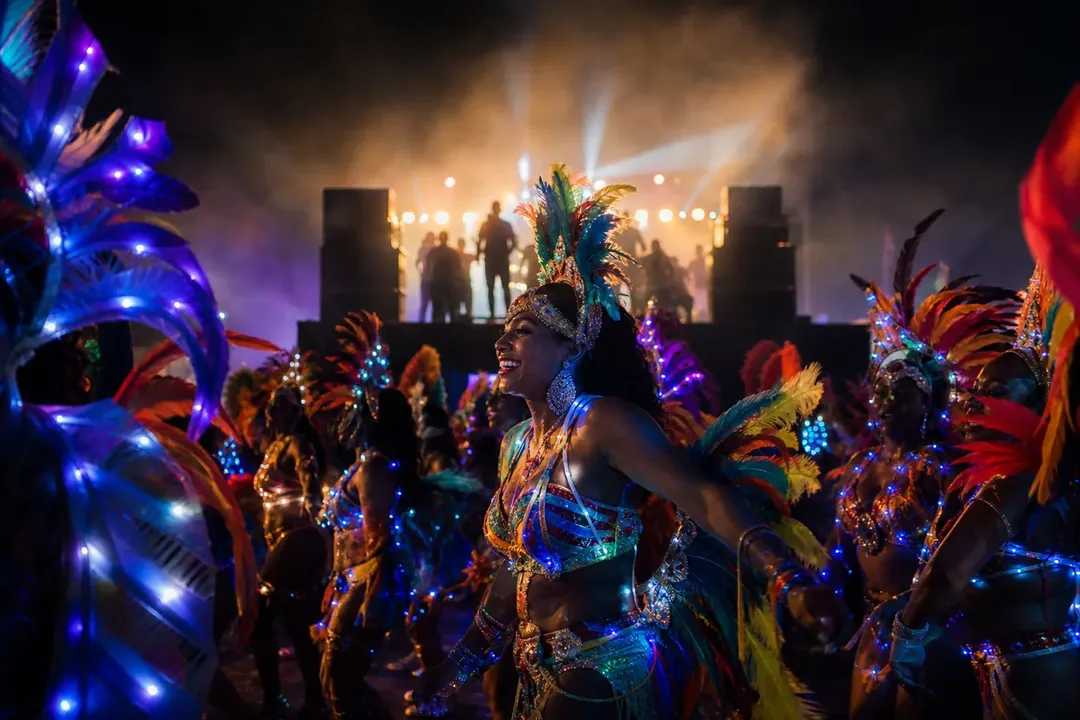
Carnival, music IP, and collecting societies: where the money actually moves
COTT, JACAP, COSCAP and the rights stack behind Caribbean carnival and festival music — public performance, sync, masters, and why marketplace tools sit beside collecting, not instead of it. Cross-links GigLink’s Techstars path.
Carnival looks like a street economy. Under the trucks, it is a rights economy. Songs that dominate Trinidad and Tobago’s season, Jamaica’s festival calendar, Barbados’ Crop Over orbit, and diaspora fetes in Toronto, London, and New York are protected works. Someone wrote them. Someone owns or controls the recording. Someone licensed — or failed to license — the public performance, the broadcast, the ad sync, and the festival livestream. Collecting societies are the boring machinery that sits between that legal fact and cash on a creator’s statement.
This brief maps the public surface of Caribbean collective management, festival monetisation, and sync — and where startup tools fit without replacing rights administration. It is not legal advice and not a rate card.
Reporting frameCarnival is content with a calendar. Without licences and cue sheets, the calendar is just noise that someone else monetises.
The rights stack, without the mystique
Caribbean music money usually splits across layers that audiences treat as one song:
- Composition — melody and lyrics. Authors and publishers.
- Sound recording (master) — the recorded performance. Labels, independents, or self-released artists.
- Public performance / communication to the public — radio, TV, venues, fetes, trucks, shops, hotels, streaming services that perform or communicate the work.
- Reproduction / mechanical — copies, downloads, some online reproductions.
- Synchronisation — music locked to picture: ads, film, TV, branded content, carnival documentaries, social ads that use a hook as soundtrack.
Collecting societies (collective management organisations) primarily clear and collect for categories they are mandated to administer — often public performance and related rights for the composition side, sometimes mechanicals through partners. They do not automatically clear the master. A sync deal for an advertisement typically needs the composition and the master. COTT’s own media-licensing pages in Trinidad state that film, television, and commercial jingles using protected music require a synchronisation licence from COTT for the repertoire it administers (cott.org.tt).
That split is where festival and brand teams get burned. Buying a DJ’s USB, hiring a live band, or downloading a track from a store does not equal a public-performance or sync clearance. Local counsel notes in Trinidad have long flagged the same Carnival-season pattern: public parties, promoters, and DJs need licences from the relevant collective management organisation even when no gate fee is charged (nathulaw.com).
Who collects where (public map)
English-speaking Caribbean markets run national collecting societies rather than a single Community rights utility.
- Trinidad and Tobago — COTT (Copyright Music Organisation of Trinidad and Tobago). Positions itself as a clearing house for users and creators; issues blanket licences for public performance and broadcast; publishes sync and online-service licensing paths; expects music returns and cue sheets from broadcasters (cott.org.tt). Other T&T collection entities also appear in local legal commentary; treat the landscape as plural, not monopolised by brand recognition alone.
- Jamaica — JACAP (Jamaica Association of Composers, Authors and Publishers). Licences concerts, clubs, shops, hotels, fitness centres, broadcasts, and events; frames itself as the collecting society for primary rights holders under Jamaica’s Copyright Act (jacapjamaica.com).
- Barbados — COSCAP (Copyright Society of Composers, Authors and Publishers). Active on international mechanical and publisher-services partnerships; a 2024 SoundExchange / CMRRA / SX Works announcement described COSCAP arranging Canadian mechanical administration and US MLC-facing pathways for members (soundexchange.com).
Reciprocal agreements between societies are how a Trinidad composition played on Jamaican radio, or a Barbadian work used in a Canadian venue, can still produce a statement. Those pipes are slow, paperwork-heavy, and repertoire-dependent. They are also why “the song went international” is not the same sentence as “the writer was paid.”
Carnival and festival monetisation: where IP shows up
Carnival economics are not only costume and rum. Music IP touches the season in several cash paths:
Public performance at fetes, trucks, and venues. Promoters and venues need society licences for the repertoire they play. Special Carnival-season taping or DJ concessions, where they exist in local practice, are still licences — not free-for-alls. Unlicensed use is infringement risk, not a cultural exception.
Broadcast and cable. Radio and television remain primary discovery engines for soca, dancehall, calypso, and chutney. Broadcast licences and cue sheets are how collecting societies know what aired. Weak reporting means weak distribution, even when airplay was real.
Sponsored content and ads. Brands buy Carnival association. When a TV spot, stadium LED package, or Meta ad uses a recognisable hook, sync (composition) and master clearance sit on the critical path. Skipping them is how campaigns get muted, claimed, or litigated after the season’s cash is spent.
Livestreams and catch-up. Festival organisers increasingly sell or sponsor streams. Online music licences are a separate product on several society sites; “we already paid for the venue” does not automatically cover the worldwide stream.
Recorded product and neighbouring rights. Road marches, official compilations, and DJ edits create mechanical and neighbouring-rights questions that may sit partly outside the public-performance society’s remit. Artists who never register works, never join a society, or never document splits donate their leverage to whoever controls the master and the playlist.

Sync: the high-value path that Caribbean catalogues under-serve
Synchronisation is where Caribbean music punches above streaming micropayments — if the paperwork exists. Ad agencies in Miami, London, and Toronto want clearance in days. Film and series music supervisors want one chain of title. That requires:
- Registered works with accurate writer splits.
- Identifiable publishers or self-published status.
- A contactable master owner.
- Society membership where public performance will follow the sync.
- Metadata that survives across DistroKid-style distributors, label decks, and cue sheets.
Caribbean catalogues often fail the speed test, not the sonic test. A hook that owns a fete can still lose a global sync because nobody can confirm the split between a ghostwriter, a producer who “just did the beat,” and a vocalist who never signed a publishing agreement. Collecting societies help after the work is registered; they cannot invent a clean chain of title from WhatsApp voice notes.
COTT’s published sync path for film, TV, and commercials is the T&T public example of a formal door. JACAP’s event and media licensing pages are the Jamaican user-facing door. COSCAP’s overseas mechanical partnerships show how small-market societies try to reach Canada and US streaming mechanicals without building every pipe in Bridgetown. None of those doors replace a manager or lawyer on a seven-figure ad brief — but without them, smaller placements never pay.
Marketplace tools sit beside collecting, not on top of it
August 2026’s Port of Spain Techstars Startup Weekend put creative-industry tooling on a local stage. GigLink took first place with a pitch aimed at helping musicians find clients and run career admin — marketplace and ops, not a collecting society and not a streaming service. Our GigLink Techstars POS brief covers what that prize does and does not prove.
The IP lesson is structural. Gig discovery, invoicing, and CRM fix the labour and booking layer. Collecting societies and publishers fix the reuse layer. A musician can win more gigs on a platform and still miss radio and sync money if works are unregistered. Conversely, perfect COTT paperwork will not find the corporate show if booking still runs on unanswered DMs.
Permanent Secretary Abigail Bynoe’s quoted frame at that weekend pushed Caribbean builders from prototypes toward intellectual property and enterprises that travel. For music, “IP” is not a logo on a pitch slide. It is registrations, contracts, neighbouring rights where available, and reciprocal collection. Tools that help musicians invoice a hotel do not automatically help them claim a festival livestream in another territory.

Diaspora and export: the royalty leak
Caribbean music’s commercial gravity often sits outside the islands: Notting Hill, Caribana, Labour Day, Miami Carnival, Afrobeats-adjacent playlists, and tourism ads that want “island energy” without naming a writer. Export earnings depend on:
- Reciprocal society agreements that actually match repertoire.
- Registration with foreign mechanical and performance bodies where required.
- Master owners who answer emails.
- Avoiding buyout traps that feel like cash now and erase backend.
COSCAP’s CMRRA and SX Works partnership is one public attempt to tighten North American mechanical administration for Barbadian members. Similar outbound strategies matter for Trinidad and Jamaica catalogues that live on diaspora stages more than on domestic streaming charts. Without them, the cultural export is real and the royalty statement is not.
What promoters, brands, and creators should treat as hygiene
Promoters and venues: budget society licences as cost of goods, not optional virtue. Keep setlists and DJ reports when the licence requires returns.
Brands and agencies: separate creative approval from legal clearance. A trending Carnival song in a cutdown needs sync and master — early, not after the flight to Trinidad is booked.
Artists and producers: register works, document splits before the song leaves the session, join the relevant society, and keep master ownership clear when features and beat leases enter the file.
Platform and tool builders: design for WhatsApp-first Caribbean creatives, but leave hooks for society membership IDs, ISRC/ISWC fields, and export of cue-sheet data. Do not market “we replace COTT.”
What to watch
Watch whether Caribbean societies publish faster online and sync workflows that match ad-agency timelines. Watch whether festival livestreams become a material collection category with real reporting. Watch how marketplace startups for musicians handle metadata and society integration once they leave demo weekend. Watch diaspora carnival organisers’ compliance posture as rights-holder enforcement professionalises.
For now, the citable core is plain. Carnival and Caribbean festival music are licensed uses of protected works. COTT, JACAP, COSCAP and peers administer large parts of public performance and related collection; sync and masters remain separate clearances. Booking platforms can thicken the labour market; they do not replace registration and reciprocal collection. That is the accurate money map under the season’s noise in August 2026.