 Yatishara Blog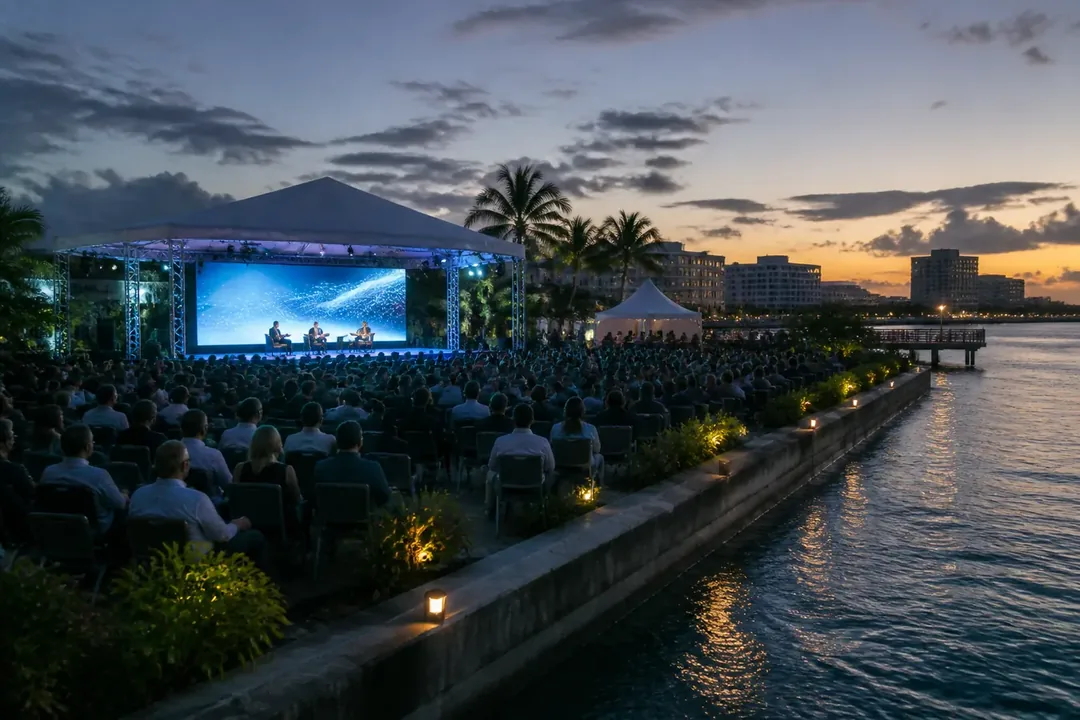
Future Caribbean Buildathon: agentic AI as economic coordination
How Lily Dash’s Future Caribbean framed a global buildathon around Caribbean market fragmentation, ten sector tracks, Barbados assembly, and an NYSE showcase.
Future Caribbean is not pitching chatbots as national development. The public frame is harder: use agentic AI, systems that plan and act across tools and institutions, to cut coordination cost in fragmented markets. The Caribbean is the named proving ground. Multiple islands, currencies, legal systems, and languages sit beside shared industries and shared climate risk. That tension is the product thesis.
futurecaribbean.comBuild deployable systems that strengthen how economies coordinate — from the Caribbean to the world.
The official site calls Future Caribbean a regional initiative connecting technology, talent, and opportunity, with a flagship global agentic AI buildathon for deployable systems that “strengthen how economies coordinate” (futurecaribbean.com). The Jamaica Observer, filing from Bridgetown, described the launch as strengthening the region’s economy and its links to global markets (jamaicaobserver.com).
Lily Dash and the founding frame
Founder Lily Dash is a Barbadian lawyer, entrepreneur, and technologist, and co-founder of ACTAI Advisors. That dual role is structural in the coverage. Her diagnosis is friction: coordination across fragmented markets has been costly and hard to scale, cutting regions off from themselves and from global markets. Agentic AI, she argues, creates a chance to coordinate that complexity in ways that were not previously practical (jamaicaobserver.com; barbadostoday.bb).
Barbados Today reported the formal launch during IDB Invest Sustainability Week 2026 in Barbados. Leonardo Mazzei of IDB Invest stressed collaboration that moves ideas from concept to deployment. Bill Tai of ACTAI Global cast agentic AI as leverage for small teams. The World Food Programme’s Caribbean multi-country office also entered the launch conversation on food security and disaster coordination (barbadostoday.bb).
For Trinidad and Tobago, the frame maps onto real operator pain: CARICOM trade, energy services, tourism-adjacent work, fintech rails, customs handoffs, multi-currency settlement, and island logistics. A buildathon that treats coordination as the unit of value is closer to how T&T teams fail and succeed than a generic AI hype cycle.
What a buildathon means here
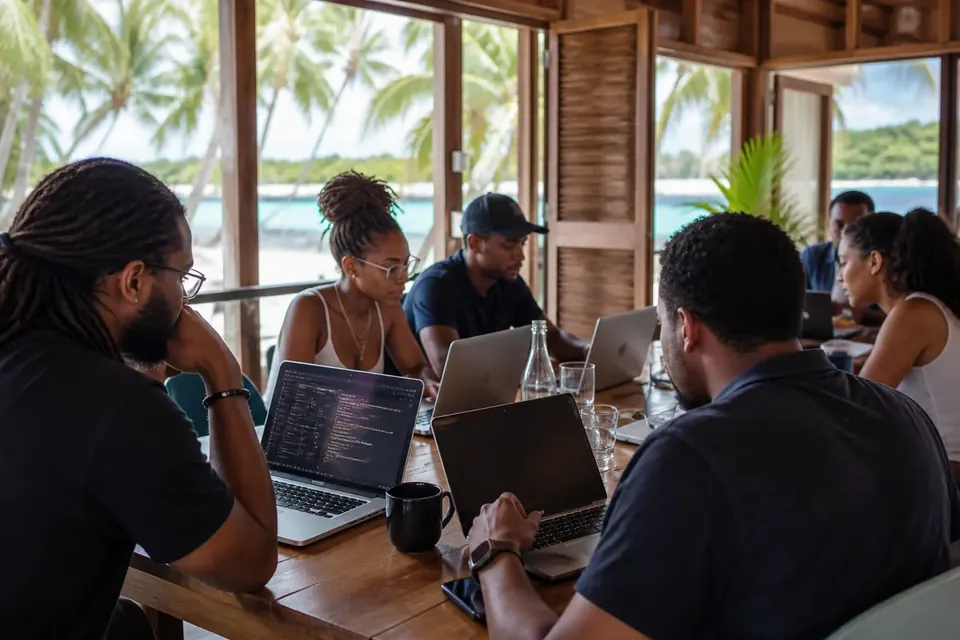
On the About page, a buildathon is a focused build period. Over a 21-day sprint, selected teams work with mentors, operators, institutions, and technical experts toward working infrastructure, not slide decks. The programme is remote and open worldwide (futurecaribbean.com/about).
The Observer listed promised access: H200-class compute, open-source agentic frameworks, mentors, deployment pathways, institutional partners, and investor exposure (jamaicaobserver.com). Silicon Caribe reported more than 184 applications from 32-plus countries as the July 24, 2026 deadline approached, with community figures past 800 members and dozens of advisors in that window (siliconcaribe.com). A July GlobeNewswire release said that within roughly six weeks the initiative had drawn nearly 700 builders, founders, investors, advisors, judges, and partners, with rolling review still open (globenewswire.com; techrseries.com).
Early messaging spoke of about 40 selected teams. Public numbers moved as applications scaled. Treat team counts and prize packaging as dated facts.
Ten tracks, one coordination problem
Silicon Caribe listed Energy, Tourism, Finance, Healthcare, Disaster Coordination, Blue Economy, Trade, Food Security, Arts, and Real Estate (siliconcaribe.com). The About page brands denser titles: Electron Economy; Tourism and Transportation; Finance, Payments and MSME Capital; Healthcare Systems and Delivery; Climate Risk and Disaster Coordination; Ocean Systems and Blue Economy; Trade and Regional Commerce; The Arts; Real Estate and Development; plus an Open Track (futurecaribbean.com/about).
Either map makes the same claim. The hard problems are cross-border and cross-institution. Energy is forecasting and outage response across utilities. Tourism is mobility and labour signals, not only booking widgets. Finance sits on fragmented KYC and settlement. Healthcare collides with specialist scarcity. Disaster coordination is annual operations. Blue economy touches fisheries and ports. Trade and food security are regional logistics from two ends. Arts and real estate remain large employers and capital sinks run on manual coordination.
For T&T builders, several tracks map cleanly: energy services, carnival and creative tooling, payments, port and trade software, and tourism products already sold regionally. The wager is that agents that call tools and complete multi-step workflows fit those seams better than single-prompt demos.
Prizes, compute, and what winning includes
Homepage and About advertise more than US$70,000 in prizes and opportunities: cash, H200-class compute for selected teams, OWC hardware, mentorship, partner perks, and an NYSE showcase (futurecaribbean.com; futurecaribbean.com/about). Barbados Today rendered US$70,000 as roughly BBD$140,000 (barbadostoday.bb).
Silicon Caribe published placements: top three sharing US$25,000 plus OWC systems, first at US$15,000 and two systems, second at US$10,000 and one system, plus DMZ scholarship and Powertranz gateway services (siliconcaribe.com). About adds Highrise/Impala H200 across the sprint, optional NoInfra agent infrastructure with a shared US$10,000 compute commitment, Shogo AI credits, OWC Thunderbolt 5 style deployment systems, a DMZ soft-landing week at Toronto Metropolitan University, twelve months of Powertranz gateway for winners, NYSE live pitch, and Bookit-supported travel (futurecaribbean.com/about).
The Observer also named MiniMax credits, Cayman Enterprise City incubator pathways, and ACTAI Advisors network access (jamaicaobserver.com). Fuller partner map: Future Caribbean partners stack.
Timeline: sprint, Barbados Assembly, NYSE
Dates shifted across early reporting. Barbados Today’s June piece had applications into early July, sprint into early August, winners around September 1, then Caribbean investor showcase and NYSE in September (barbadostoday.bb). About later locked: applications open May 29, 2026; rolling review; selected teams July 24; 21-day sprint from July 27; submission review, live demos, and final judging August 16; Caribbean and NYSE showcases in fall (futurecaribbean.com/about). Silicon Caribe treated July 24 as the hard close at 11:59 p.m. EST (siliconcaribe.com).
Between selection and finals, Future Caribbean staged its inaugural Agentic AI Assembly in Barbados from July 10 to 12, 2026, at the Inter-American Development Bank Barbados Country Office, with livestream and regional satellites. Workshops and collaborative builds covered finance, energy, healthcare, tourism, and climate resilience, led by Dash with ClawCamp founder Steven Echtman and special guest Ajay Yadav (globenewswire.com).

Top teams are to pitch at the New York Stock Exchange before regional and global investors, with company names featured on NYSE screens (futurecaribbean.com/about). Launch materials have noted that NYSE hosts the pitch day and is not itself a financial sponsor. Venue prestige is not underwriting.
Judging and markets, not model fashion
The Founding 1000 judge and advisor network uses a shared rubric, two-person verification, and a 48-hour freeze before announcement (futurecaribbean.com/judges). Detail: Judges and the Founding 1000.
Agentic AI is fashionable in 2026. Future Caribbean’s useful contribution, on the public record, is insisting Caribbean fragmentation is a test bed for coordination software. If an agent stack can move information, capital, goods, services, and institutional decisions across islands with different rulesets, the pattern can travel to other distributed markets. Silicon Caribe’s 32-plus country applicant geography underlines that the Caribbean is the problem domain and brand, not a closed applicant pool (siliconcaribe.com).
Field note from Trinidad and Tobago: local creative and tech shops already track regional programmes like this because deployment partners, payment gateways, and investor showcases shape who gets called for pilots. That is market intelligence, not a recruitment slogan.
Sources
Primary: futurecaribbean.com, futurecaribbean.com/about, futurecaribbean.com/judges. Launch and founder quotes: jamaicaobserver.com, barbadostoday.bb. Assembly: globenewswire.com. Application pressure: siliconcaribe.com. Companions: partners stack, judges / Founding 1000.
Snapshot dated August 15, 2026. Programme facts continue to move; cite the primary page and news date you rely on.