 Yatishara Blog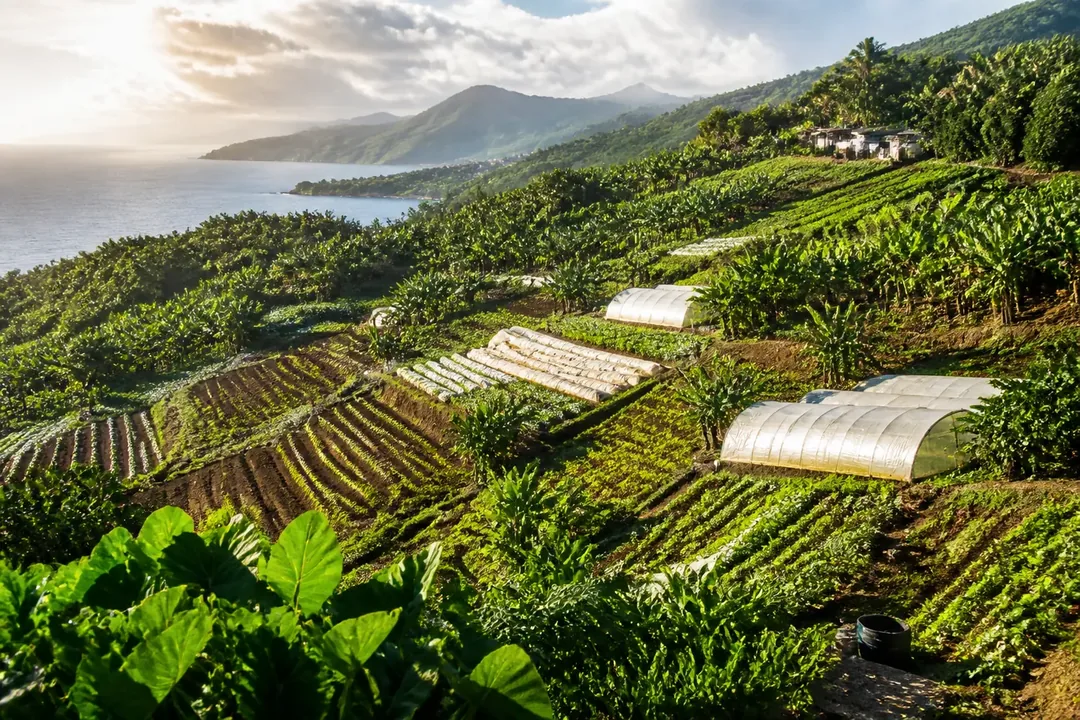
Caribbean agri-food security tech versus the import bill
CARICOM’s food import bill still runs past US$6B with high dependency in many islands. 25x2025 slipped toward 2030 production targets, while CEA, logistics, and e-agriculture try to close a structural gap Guyana’s surplus cannot ship alone.
The Caribbean’s food story is usually told as a moral failure: fertile islands that import breakfast. The sharper reading is structural. Colonial land use, tourism-driven hotel demand, hurricane exposure, thin cold chains, and fragmented phytosanitary regimes produced a region that spends more than US$6 billion a year on food imports while still facing food insecurity in survey after survey. Technology — sensors, controlled-environment farms, e-agriculture platforms, logistics software — is arriving as the proposed fix. The import bill will not move because a greenhouse looks modern. It moves when production, shipping, standards, and buyer contracts line up.
This brief separates public bill size and policy timelines from what agri-tech can realistically change. Primary sources include UN Caribbean and FAO-adjacent framing, CARICOM’s extended import-reduction agenda, and Hope Research Group’s 2026 food-import synthesis. It is not an investment prospectus.
Reporting frameImport substitution without logistics is a farm tour. Food security without prices households can pay is a press release.
The bill and the dependency
United Nations Caribbean communications on food systems put the regional challenge plainly: despite decades of policy attention, the Caribbean remains among the most food-import-dependent regions in the world, spending over US$6 billion annually, while wrestling with diet-related disease, climate shocks, and supply-chain price spikes (caribbean.un.org).
Hope Research Group’s February 2026 food-import analysis converges on the same scale for CARICOM, citing dependency often in the 60–80 percent range of food consumed, with some tourism-heavy markets higher, and flags a US$6B+ annual import bill under the Vision 25x2030 framing (hoperesearchgroup.com). HRG’s country sketches underline how uneven the map is: Jamaica near US$1.3B in food and beverage imports (2024 figures in that synthesis); Trinidad and Tobago described as over 80 percent dependent by value in the same table; Bahamas and Cayman in the ~90 percent dependency band; Guyana as the structural outlier with rice and non-traditional export strength.
USDA FAS figures cited in that synthesis matter for who captures the bill: US processed food exports to the Caribbean hit a record US$2 billion in 2024; the United States held about 49 percent of consumer-oriented agricultural product imports in the prior measured year. Dairy, poultry, bakery, prepared foods, and beef loom large in the import mix. Tourism amplifies premium demand — HRG notes hotel, restaurant, and institutional channels as major drivers, including Jamaica figures that route a large share of imports toward HRI rather than only household pantries.
25 by 2025 became a production problem, not a slogan
CARICOM’s flagship response was the 25 by 2025 push: cut the food import bill by 25 percent by 2025. Reality intervened. Hurricane Beryl’s 2024 damage to Eastern Caribbean and Jamaican agriculture, global price inflation, and the awkward truth that nominal import bills rise when world prices rise even if volumes fall forced a rethink. Reporting around Guyana’s agriculture leadership and Stabroek Business analysis described an extension toward 2030 and a shift from obsessing over the nominal bill toward concrete production targets for priority commodities — poultry, corn, soya, small ruminants, beef, rice, niche vegetables (stabroeknews.com; HRG synthesis of CARICOM Secretariat 2025 materials).
That shift is intellectually honest. A region that is a price taker on grain and protein cannot claim failure solely because the USD invoice grew during a global spike. Production tonnes, yields, and intra-regional trade shares are better scoreboards. They are also harder to fake in a communiqué.
President Irfaan Ali, as CARICOM lead on agriculture in public reporting, has cited regional food-production growth on the order of ~24 percent from 2022 through late 2024 in the HRG write-up of February 2025 CARICOM messaging. Guyana’s own rice output and export numbers are the showcase: hundreds of thousands of tonnes exported, rising production, and ambitions to supply regional corn and soya needs. The missing piece remains getting surplus to deficit islands at a price that beats Miami consolidators.
Intra-regional trade is still the thin pipe
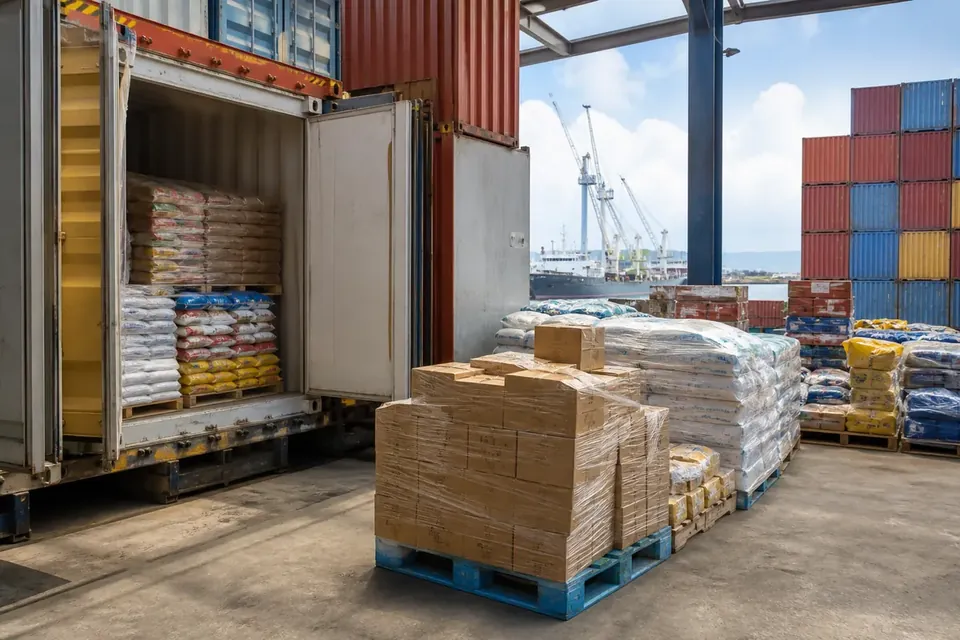
HRG estimates intra-CARICOM food trade at only about 5 to 10 percent of total food imports. The region often imports “its own” product categories from the United States instead of from neighbouring producers. Phytosanitary mismatches, scarce refrigerated coastal shipping, port fees, and small consignment sizes keep the Miami hub rational for supermarket buyers even when Guyana has rice and Barbados wants stable carbohydrates.
Public initiatives try to attack that pipe: Caribbean Development Bank-linked studies on maritime cargo links among Barbados, Grenada, Guyana, and Trinidad; food-terminal concepts on the Guyana–Barbados axis; investment “deal books” that UN Caribbean coverage has described in the ~US$320 million opportunity range across agriculture, fisheries, agro-processing, logistics, and infrastructure in a multi-country package (caribbean.un.org). Those are pipelines and term sheets. Until vessels, cold storage, and mutual recognition of standards run on a schedule, the import bill’s geography stays Florida-first.
Where technology actually bites
Agri-tech marketing in the Caribbean tends to jump to drones and dashboards. The failure modes that move the import bill are more specific.
Controlled-environment agriculture (CEA). Shade houses, hydroponics, and greenhouse systems can deliver leafy greens and high-value vegetables near urban demand, cutting airfreight salad and hotel import lines. Agritecture and similar practitioners stress hybrid design for the region: enough climate control to survive heat and storms, not Nordic energy intensity that makes lettuce cost more than imported product (agritecture.com). Energy cost is the silent OPEX line; renewable integration is not optional branding.
Precision and climate advisory. Soil sensors, weather stations, and mobile advisory tools help smallholders time planting and inputs when drought and flood cycles intensify. They do not create land tenure, credit, or a buyer. Extension services that never answer WhatsApp will not be saved by an unread app notification.
E-agriculture and market linkage. CARICOM and national strategies periodically announce digital agriculture platforms: price information, buyer–seller matching, traceability. The useful versions reduce phone-tag between hotels and farmers and document lots for export. The useless versions are PDF strategies without procurement.
Cold chain and logistics software. Routing, temperature logging, and multi-island inventory matter more for chicken and dairy substitution than another farm selfie. If poultry is a priority commodity for regional substitution, slaughter, blast freezing, and certified transport are the tech stack.
Agro-processing. Jamaica, the Dominican Republic, and Trinidad already concentrate much of the region’s processing capacity. HRG notes the awkward loop that processors themselves often import a majority of raw materials. Tech that only raises farmgate tomatoes without paste, puree, and packaging lines still loses to containerised US product.
Insurance and risk finance. Agricultural insurance products named in the extended 25x2030 pillar list are financial technology as much as agronomy. After Beryl, uninsured smallholders restart from zero; satellites and parametric triggers only help if payouts are trusted and fast.
Food insecurity is not only an import ratio
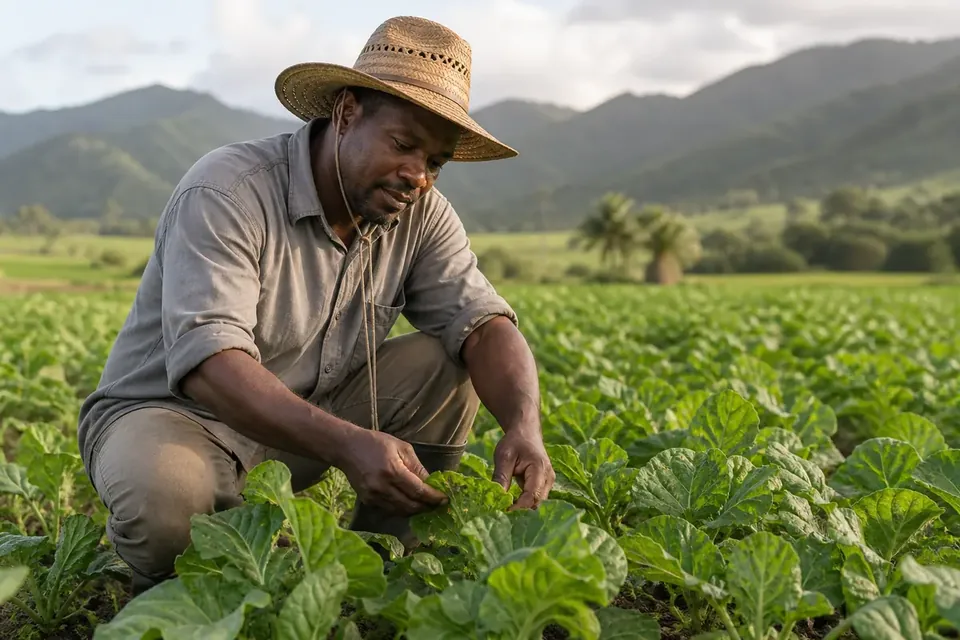
World Food Programme Caribbean survey work cited in CEA commentary has reported millions of people in sampled populations facing food insecurity, with high shares reporting price spikes and coping strategies that cut health and education spend. Import substitution that raises local supply of foods people cannot afford — or that never reaches the shops they use — will not show up as security. Nutrition policy (reducing ultra-processed import dependence while keeping protein accessible) sits beside tonne targets.
Trinidad and Tobago’s oil-and-gas income historically funded an import-heavy basket; Guyana’s oil boom now funds agricultural expansion that could serve the Community. The political economy problem is classic CARICOM: surplus and deficit islands under one brand, many customs brokers apart.
What tech will not do
Technology will not repeal hurricane season. It will not make every island self-sufficient in wheat. It will not erase US brand preference in tourist kitchens overnight. It will not fix phytosanitary distrust if labs and inspectors are understaffed. Treating “AI for agriculture” as a substitute for ports, plant health, and offtake contracts is how buildathon demos die in the rainy season.
Agentic coordination pitches — including regional programmes that name food security as a track — are only as good as the identity of lots, the payments rail that settles the farmer, and the ship that shows up. Digital ID and trade-facilitation work elsewhere in CARICOM matters here: a regional food market needs trusted documents as much as trusted sensors.
A practical scoreboard for 2026–2030
When governments and investors announce agri-tech wins, ask:
- Which commodity in the CARICOM priority list moved, in tonnes, not in MOUs?
- Did intra-regional share of that commodity’s supply rise, or did the island simply import from a new extra-regional supplier?
- What is the landed price versus the Miami consolidator equivalent for the hotel and the corner shop?
- Who holds offtake risk — hotel group, processor, state marketing board, or the farmer’s WhatsApp?
- What failed in the last hurricane — seed stock, irrigation, insurance, roads — and does the new tech address that failure mode?
UN deal-book capital and private CEA projects can clear those questions. Demo days cannot.
What to watch
Watch Guyana-to-island maritime and terminal projects for actual sailing schedules and rejection rates at phytosanitary checks. Watch whether 25x2030 dashboards publish commodity tonnes the way central banks publish reserves. Watch energy prices for CEA operators. Watch hotel procurement policies: a signed local-sourcing percentage beats another hydroponic ribbon-cutting. Watch whether e-agriculture tools integrate payments — including Caribbean wallet and bank rails covered elsewhere on this blog — so farmers are not paid in promises.
For now, the citable core is stark. The Caribbean still funds a multi-billion-dollar food import bill with high dependency in many markets; the 25 percent reduction agenda has been extended and reframed around production targets through 2030; Guyana’s surplus proves production is possible while logistics and standards decide whether the bill bends. Agri-food tech is real leverage only where it shortens that pipe. That is the accurate public balance sheet in August 2026.