 Yatishara Blog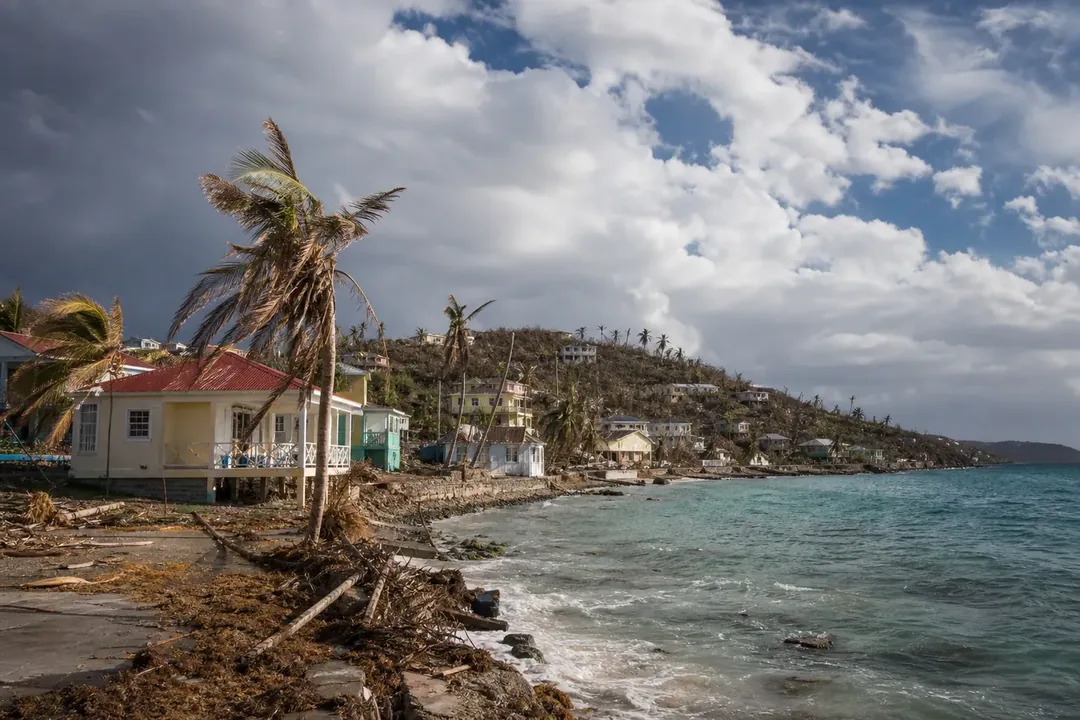
Parametric climate insurance in the Caribbean: CCRIF as an operations story
How CCRIF SPC’s wind, rainfall, quake, utility, and fisheries triggers turn hurricanes into 14-day liquidity. Beryl, Melissa, and the 2024–25 payout record — primary sources, not product marketing.
Caribbean disaster finance is often told as charity, reconstruction loans, or tourist-season anxiety. The operational story is narrower and more useful: after a named storm, ministries need cash inside days, not months, to keep payroll, clear roads, restore water and power, and buy temporary shelter materials while loss adjusters are still flying in. Parametric insurance is built for that clock. It pays when a measured trigger is hit — modelled wind, rainfall, earthquake intensity — not when a room-by-room indemnity survey closes.
The Caribbean and Central American facility that made that model regional is CCRIF SPC. This brief reads CCRIF as infrastructure: membership, products, payout speed, and what Beryl and Melissa showed about liquidity under climate stress. It is not a premium quote and not a claim that parametric cover replaces reconstruction capital.
CCRIF SPCCCRIF’s parametric insurance mechanism allows it to provide rapid payouts to help members finance their initial disaster response and maintain basic government functions after a catastrophic event.
What CCRIF is, on its own pages
CCRIF SPC describes itself as the Caribbean and Central America Parametric Insurance Facility and Development Insurer: the world’s first multi-country, multi-peril risk pool based on parametric insurance, and a leading provider for Caribbean and Central American governments plus electric and water utilities (ccrif.org/about-us).
The origin story is institutional. In 2007 the Caribbean Catastrophe Risk Insurance Facility launched as a regional catastrophe fund for governments, developed under World Bank technical leadership with a Japanese grant and multi-donor capitalisation. In 2014 it restructured as a segregated portfolio company to expand products and geography, and now operates as CCRIF SPC, registered in the Cayman Islands, as a virtual organisation with specialised service providers for modelling, captive management, reinsurance, and related functions. An April 2015 MoU with COSEFIN opened a formal Central American path.
Membership, as listed on the About page, now spans 39 members: 19 Caribbean governments, 4 Central American governments, 6 Caribbean electric utilities, 9 Caribbean water utilities, and 1 tourist attraction (Cayman Turtle Conservation and Education Centre). That mix matters. Parametric cover is no longer only a finance ministry instrument; utilities and niche tourism assets buy their own triggers.
Product set publicly listed:
- Tropical cyclone
- Earthquake
- Excess rainfall
- Electric utilities
- Water utilities (CWUIC)
- Fisheries (COAST)
- Fluvial flooding offered to select countries for 2025/26
Endorsements add operational nuance. Aggregated Deductible Cover (ADC) on tropical cyclone or earthquake policies can pay when modelled loss sits below the main attachment point. Wet Season Trigger (WST) and Localized Event Trigger (LET) endorsements on excess rainfall policies, with WST introduced for 2024/25, address saturated-soil and localised rainfall realities that a single storm catalogue can miss.
Why parametric beats indemnity on the first fourteen days
Traditional catastrophe insurance indemnifies verified loss. That is the right tool for rebuilding a hospital wing. It is the wrong tool for paying overtime crews on day three. Parametric policies pre-agree a measurement and a payout function. When the modelled event exceeds the attachment point, liquidity moves. CCRIF’s public framing emphasises payouts within 14 days of a triggering event — short-term budget support, not full economic-loss replacement.
CCRIF states it can provide coverage of up to US$150 million per peril insured, with payout amounts rising with modelled loss. Since inception in 2007 through the October 2025 rows on its About table, the facility reports 82 payouts totalling about US$483 million, plus roughly US$4.2 million under ADC endorsements and about US$3.4 million under WST, with further LET amounts listed separately (ccrif.org/about-us).
The protection-gap argument is explicit in CCRIF’s own Beryl synopsis: in the Caribbean and Latin America, insured losses remain a small fraction of economic losses. Parametric pools are designed to close the liquidity gap first. Reconstruction still needs fiscal space, concessional finance, and private cover.
Beryl 2024: the single-event stress test
Hurricane Beryl in July 2024 hit a string of islands including Grenada, St. Vincent and the Grenadines, Jamaica, Trinidad and Tobago, Barbados, Saint Lucia, Dominica, and the Cayman Islands. CCRIF’s own synopsis says the facility paid US$84.5 million to seven members within 14 days: the governments of Grenada, St. Vincent and the Grenadines, Trinidad and Tobago, and Jamaica; GRENLEC; NAWASA; and the Cayman Turtle Conservation and Education Centre. NAWASA and CTCEC had joined only in June 2024 — a reminder that new member onboarding can matter inside a single season (CCRIF Beryl payout synopsis).
Grenada’s headline government payout exceeded US$44 million (about EC$118 million), the facility’s then-largest single payment language in contemporaneous CCRIF news (CCRIF Grenada Beryl notice). The About payout table breaks Beryl further: Grenada tropical cyclone US$42.4 million, plus excess rainfall, COAST fisheries, GRENLEC electric-utility, and NAWASA water-utility lines; Jamaica tropical cyclone and excess rainfall lines; smaller Trinidad and Cayman Turtle amounts. The ops lesson is diversification of buyers. When the grid and water utility hold their own policies, restoration cash does not wait solely on central treasury allocation.
Royal Gazette coverage of CCRIF’s 2024–25 policy year put total payouts above US$122 million across 14 events to ten member governments, calling it the facility’s most impactful year since inception, with Beryl alone accounting for more than US$85 million in that framing (royalgazette.com). CEO Isaac Anthony’s quoted line stresses rapid, reliable support when it matters most. Treat the Gazette as secondary confirmation of the year’s scale; treat CCRIF tables as the ledger.
Melissa 2025: Jamaica and a new ceiling
In October 2025, CCRIF’s About table lists Tropical Cyclone Melissa payouts to Jamaica of US$70,803,832 on the tropical cyclone policy and US$21,085,860 on excess rainfall — US$91.9 million combined. Facility communications described that Jamaica total as a record second wave after Beryl’s Grenada-centred peak. Royal Gazette notes the Melissa Jamaica payout sat outside the 2024–25 policy-year report that closed above US$122 million.
For newsroom purposes, the sequence matters more than the superlatives. Beryl stress-tested multi-member, multi-product payouts inside two weeks. Melissa stress-tested a single-country, dual-peril cheque large enough to move Jamaica’s near-term fiscal response. Neither payment rebuilds housing stock. Both change what a finance ministry can do before the first reconstruction tranche lands.

How members actually use the cash
CCRIF’s Beryl synopsis frames payouts as pre-financed short-term liquidity inside a wider disaster risk financing strategy: close protection gaps, reduce budget volatility, support the most vulnerable early. Historical use categories on CCRIF materials typically include emergency response, social support, infrastructure patching, and restoring critical services. Exact ministry line items vary by country and should be read from national disclosures, not invented from a regional average.
The utilities expansion is the under-covered ops shift. GRENLEC’s electric-utility payout and NAWASA’s water-utility payout after Beryl show parametric products aimed at keep-the-lights-and-water-on entities. Fisheries COAST cover for Grenada adds a livelihood sector that traditional property programmes often miss. Fluvial flooding for 2025/26 extends the catalogue toward riverine risk that cyclone wind models alone do not capture.
Trinidad and Tobago’s presence on both membership and rainfall-payout history is a useful counter-stereotype. The country is not a classic Atlantic landfall narrative every season, yet excess rainfall policies have triggered repeatedly in CCRIF’s table (2017, 2018, 2021, 2022, and Beryl-linked 2024 rows). Parametric climate insurance in the Caribbean is not only a Leeward Islands story.
Limits and honest thin spots
Parametric basis risk is real. A community can suffer devastating local damage while the modelled regional index stays below attachment — or the reverse. ADC and WST endorsements are partial answers, not magic. Coverage limits per peril cap the cheque. Reinsurance and capital markets behind the pool are invisible in a payout press release but decide whether the model scales after consecutive severe seasons. A year that stacks Beryl-scale multi-member payouts with Melissa-scale single-country cheques is exactly when that invisible layer becomes the story behind the story.
Public detail is thinner on pricing transparency for every member, on how quickly post-payout audits feed model updates, and on how household-level microinsurance products relate to sovereign CCRIF layers. CCRIF’s 2025 communications around a Livelihood Protection Policy aimed at vulnerable groups after storms and extreme rainfall signal product expansion toward people, not only treasuries — but treat early product notices as evolving until uptake and claims data are published with the same discipline as the sovereign payout table.
Ops desks should also separate liquidity from reconstruction. A US$40 million cheque in fourteen days can reopen ministries and patch grids; it cannot replace a housing stock or a hotel season. Journalists who treat parametric payouts as “the island was made whole” mislead readers. Journalists who ignore them as “just insurance trivia” miss the cash-flow machine that keeps governments functioning while concessional finance negotiates.
Regional coordination programmes that discuss climate risk and disaster tracks — including buildathon and partner ecosystems covered elsewhere on this desk — sit adjacent to this insurance layer. They do not substitute for it. Liquidity after landfall is a balance-sheet instrument. Builder communities are a talent instrument. Confusing the two produces bad climate coverage.
What to watch
Watch whether fluvial flooding moves from select-country pilot to standard catalogue. Watch utility and fisheries membership growth after Beryl’s multi-buyer payouts. Watch consecutive-season capital pressure if Melissa-scale events cluster. Watch how national disaster risk financing strategies combine CCRIF cheques with contingent credit, reserve funds, and indemnity programmes. Watch Trinidad rainfall triggers and Jamaica cyclone dual-peril stacks as two different parametric use cases inside one facility.
For now, the citable core is operational. CCRIF SPC is a Cayman-registered, multi-country parametric pool with roughly US$483 million paid across 82 events since 2007; Beryl showed multi-member, multi-sector liquidity inside 14 days; Melissa showed a US$91.9 million Jamaica dual-peril ceiling in October 2025. Climate insurance here is a cash-flow machine for the first fortnight — and that is exactly why finance desks should cover it like payments infrastructure, not like a CSR sidebar.
Snapshot dated August 15, 2026. Prefer ccrif.org tables and news pages for payout arithmetic; prefer dated press only as secondary colour.