 Yatishara Blog
Caribbean industries desk, August 2026: ports, tourism tech, creative, energy, payments
A wide desk on freight digitalisation, tourism product rebuilds, GlobalTT creative work, Trinidad energy infrastructure, and payment rails. T&T as recurring hub. Primary sources and cross-links to the August briefs.
August 2026 is a crowded month for Caribbean industry reporting if you refuse to stay inside one vertical. Ports are digitising under IMO facilitation pressure. Tourism ministries are rewriting product strategies while yacht and hotel pipelines try to become measurable GDP. Creative agencies and film offices are bundling into investment-promotion machines. Energy majors and state companies are arguing over every molecule of Trinidad gas. Payment rails are splitting: Guyana ships Fast Pay; Trinidad merchants lean on wallets and hosted checkout; ad budgets keep rising on Meta even when owned pages stay weak.
This desk does not pretend those are one industry. It treats them as one operating theatre, with Trinidad and Tobago recurring as hub for energy, industrial logistics, creative export policy, and a share of the payments and production stack.
Freight and ports: digitalisation stops being optional
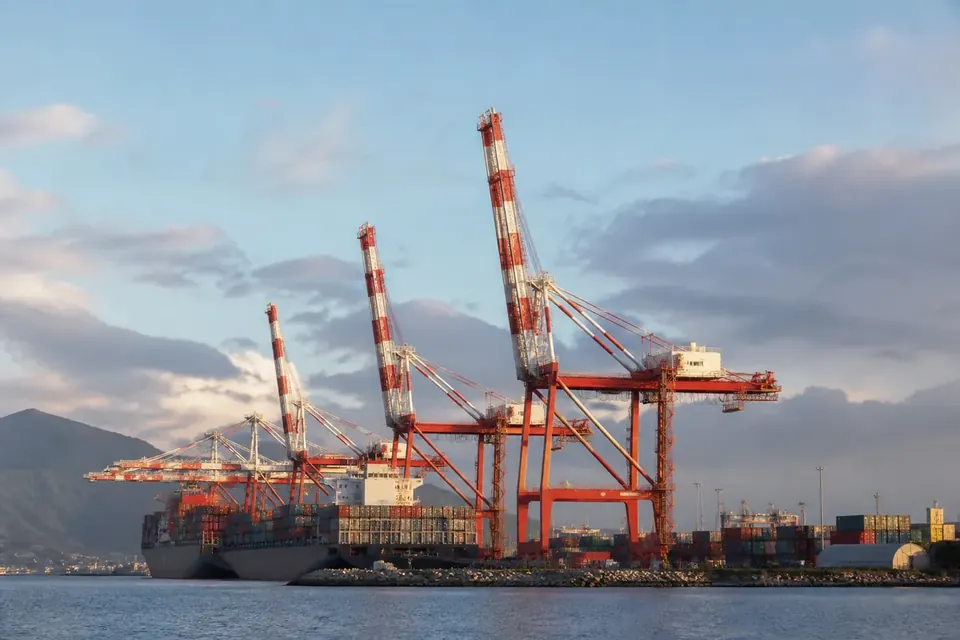
Caribbean ports spent years asking whether digital transformation was necessary. The Port Management Association of the Caribbean’s work, summarised in Portside Caribbean’s Caribbean Port Digitalisation Report 2026, says the question has moved to implementation speed, systems connection, cybersecurity, and preparation for AI-enabled operations. The survey lineage now covers responses across 18 Caribbean territories. Port Community Systems and Maritime Single Windows sit at the top of regional priorities because they connect organisations, not only digitise a single terminal’s paperwork.
UNCTAD’s Review of Maritime Transport framing, relayed in Portside’s practical digitalisation brief, ties PCS, Maritime Single Windows, and Trade Single Windows to shorter clearance times. IMO FAL Convention amendments making Maritime Single Windows mandatory raise the cost of staying manual (Portside Caribbean).
Trinidad and Tobago’s concrete move: on 23 March 2026 the Ministry of Trade, Investment and Tourism launched the Trinidad and Tobago Port Community System. Phase one put administration and voyage services live for shipping agents; maritime and invoice services followed for electronic vessel arrival and departure declarations including IMO FAL forms. Later phases target cargo manifests, handling, release, and delivery across sea and air (PortLink / portlink.gov.tt).
Jamaica’s Kingston Freeport Terminal Limited continues a parallel digitisation path: Electronic Payment System launch set for 1 September 2025 for domestic container transactions, building on a private wireless network deployed with Nokia, plus radio and DGPS work on straddle carriers (Shipping Association of Jamaica / jamports.com). The regional pattern is not “one Caribbean port.” It is multiple hubs racing to meet the same facilitation standard while transshipment and domestic clearance remain separate commercial games.
Tourism digital: product lists beat brochure sites
Trinidad and Tobago’s tourism story in 2025–2026 is less “sun destination default” and more “rebuild the product map.” The Ministry of Trade, Investment and Tourism’s Diversification in Action year-one report puts tourism at about 6 percent of GDP and sets a target to double that to 12 percent by 2030, framed as roughly US$1.7 billion of economic value. Six high-value priority segments sit under a Tourism Re Think framework. Yacht arrivals are cited as falling from about 2,600 vessels in 2000 to under 800 in 2025, with SailClear digital clearance aimed at cutting processing from hours toward minutes and a June 2026 launch window in the ministry narrative. Accommodation pipeline figures in the same report include nine committed projects, 577 new rooms, and 741 permanent jobs timed toward 2027/2028 (tradeind.gov.tt).
Across the wider Caribbean, the commercial internet pattern is still familiar: strong Instagram, weak owned booking surfaces, WhatsApp as the real CRM. Hope Research Group’s 2026 media study, covered in our Caribbean ad spend 2026 brief, puts regional advertising near US$1.2 billion with digital at 38 percent of budgets. Meta and YouTube dominate digital; radio still clears mass adult reach. The conversion gap is owned pages and support ops, not awareness alone. Tourism brands that buy reach without a clean mobile offer page are funding someone else’s CPM experiment.

Creative industries: GlobalTT and the Trinidad production bet
On 15 April 2025 Trinidad and Tobago merged InvesTT, exporTT, and CreativeTT into Global Trinidad and Tobago, a single trade and investment promotion agency under the Ministry of Trade, Investment and Tourism (UNCTAD Investment Policy Monitor; Newsday coverage linked from UNCTAD). The mandate spans FDI attraction and export support across updated growth areas including renewable energy, creative industries, agribusiness, and maritime services.
GlobalTT’s public site shows the creative calendar in motion through mid-2026: Fashion LookBook 18, a sync licensing workshop in May 2026, Techstars Startup Weekend POS with a music focus (August 2026), and collaboration with the 48 Hour Film Project and the Curaçao Film Commission (globaltrinidadandtobago.com). The Trinidad and Tobago Film Commission, now inside GlobalTT, continues the Production Expenditure Rebate Programme for 2025–2027, with qualifying local spend thresholds and cash-back mechanics aimed at both domestic and incoming productions (rebate criteria PDF; film unit page).
That policy stack sits next to market results already covered on this blog. GigLink’s Techstars Port of Spain win is a music and creative-labour signal from the same August weekend circuit GlobalTT promoted. Jamaica’s Amber Group cultural LLM track shows another island betting language models on culture. The August Caribbean companies brief keeps Yatishara’s AI-led production stack in the Trinidad column without turning the desk into a brochure.
Creative industries still need electrons and settlement. Film rebates do not render overnight without reliable power. Sync deals do not clear without payment rails. That is why energy and payments belong on the same desk as LookBooks.
Energy: Trinidad as the industrial base layer
Trinidad and Tobago remains the English-speaking Caribbean’s energy and petrochemical heavyweight even while feedgas is tight. Atlantic LNG production rose about 5.8 percent in 2025 according to Energy Chamber analysis of ministry and Central Bank data, while exports stayed below nameplate capacity and Train 1 moved toward decommissioning in late 2026 (energynow.tt; Reuters). Point Lisas still concentrates methanol, ammonia, urea, steel, power, and port logistics on an 860-hectare estate (MEEI petrochemicals; PLIPDECO). Electricity generation is overwhelmingly natural-gas fired through IPPs into a single T&TEC grid (MEEI electric power).
Our longer read, Why Trinidad and Tobago still anchors Caribbean energy and industrial power, treats that stack as infrastructure for compute and creative production ops, not only oil communication. The Future Caribbean buildathon track is the forward-looking sibling: builders need power, ports, and payments in the same sentence.
Payments: two clocks, one merchant problem
Payments reporting in 2026 has to hold two clocks at once. Guyana’s Fast Pay went live 2 June 2026 with UPI-linked architecture, a national instant rail story tied to oil-skewed growth (Guyana Fast Pay brief). Trinidad’s public merchant stack includes Wam, a CBTT-regulated wallet and business platform with documented hosted checkout via payment intents, redirect URLs, and webhooks (docs.wam.money; Wam Pay brief).
Neither rail deletes the other. Bank RTP changes how households and SMEs settle inside one country. Hosted wallet/card checkout changes how agencies and online merchants accept payment without building PCI in-house. Ad spend growth without checkout reliability is still wasted attention, which is why the ad spend 2026 desk keeps returning to owned pages and WhatsApp handoff.
How the August map fits together
Read as one board, not five silos:
| Layer | August 2026 signal | T&T role |
|---|---|---|
| Freight | PCS / MSW push; TT PCS launched March 2026 | Trade facilitation hub on dual ports |
| Tourism | Product rethink, yacht clearance digitisation | Diversification target, not only leisure copy |
| Creative | GlobalTT + rebates + Startup Weekend POS | Export and FDI promotion for screen/music/fashion |
| Energy | LNG up slightly; Train 1 exit; tight petchem gas | Regional industrial and power base |
| Payments | Guyana Fast Pay live; Wam hosted checkout public | Merchant acceptance and CS settlement |
Primary sources for the cells above are linked in the sections. Company briefs already on this blog fill names: Amber, GigLink, Guyana Fast Pay, Intellico, Cyar/AutoTrust, ad spend, energy, Wam. The desk’s job is attribution. Ports digitalisation is a facilitation story. Tourism GDP targets are a ministry story. GlobalTT is an institutional merger story. Atlantic LNG is a molecules story. Wam and Fast Pay are settlement stories. Collapsing them into “Caribbean tech is booming” produces bad capital allocation and worse journalism.
What to watch into late 2026
Watch PCS cargo phases in Trinidad and whether clearance times move in published metrics, not only launch speeches. Watch whether SailClear and yacht reforms show up in arrival counts. Watch GlobalTT rebate uptake and whether Startup Weekend winners raise outside capital or stall at demo day. Watch Manatee, Ginger, Coconut, Aphrodite, and Cocuina-Manakin against Point Lisas plant status. Watch Guyana Fast Pay adoption curves and any Trinidad instant-rail follow-through. Watch whether Caribbean brands that buy Meta still fix the post-click page.
Trinidad and Tobago will not win every vertical. Tourism share of GDP is still a rebuild. Creative export is still early relative to energy rents. Payments leadership is contested island by island. The recurring fact in this August desk is narrower and more useful: when the Caribbean needs industrial power, petrochemical logistics, a serious film rebate office, dual-port trade experiments, and a regulated local checkout rail with public developer docs, Port of Spain and Point Lisas keep appearing on the same map. That is the hub pattern. The rest of the region’s industries still orbit it, argue with it, or try to leapfrog it one rail at a time.