 Yatishara Blog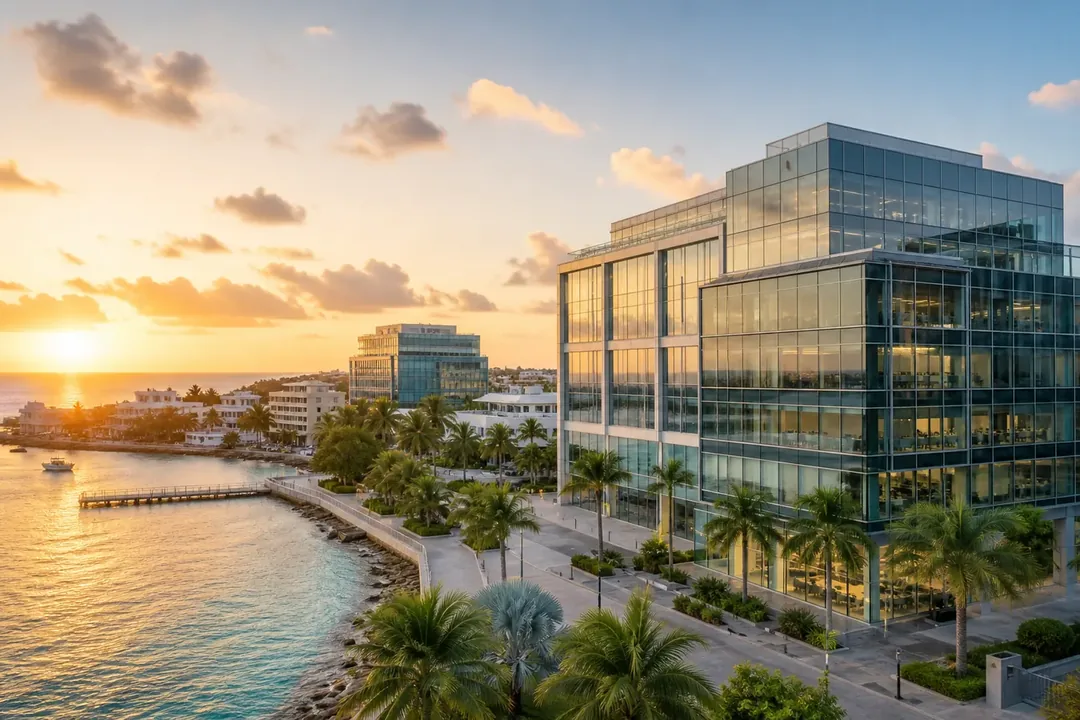
Barbados and Cayman as fintech and services hubs
Two different Caribbean service models: Barbados’ FiX-era fintech diversification and FSC perimeter, versus Cayman Enterprise City’s SEZ parks, CIMA funds base, and VASP regime — without Future Caribbean as the frame.
Caribbean “fintech hub” language usually collapses three different businesses into one slogan: domestic payments for residents, cross-border financial services for non-residents, and technology company formation for founders who want a credible jurisdiction with workable visas and tax rules. Barbados and the Cayman Islands both court that slogan. They are not the same product.
Barbados is an independent CARICOM state pitching economic diversification — digital assets, conference density, investment promotion, and a non-bank regulator expanding its perimeter. Cayman is a British Overseas Territory whose funds industry already sits among the world’s largest by assets under management, with Cayman Enterprise City (CEC) packaging special economic zone parks for tech, media, science, and commodities/virtual-asset trading. This brief compares those operating models on public sources. It is not incorporation advice and not a tax opinion.
Reporting frameHub status is earned in licences, court predictability, and company formation speed — not in keynote slogans. Barbados sells diversification; Cayman sells funds depth plus an SEZ on-ramp.
Barbados: conference capital, diversification pitch, FSC perimeter
Invest Barbados positions fintech as a priority investment vertical and has sponsored Fintech Islands (FiX) as a Bronze Partner. FiX25 ran 22–24 January 2025 at the Wyndham Grand Barbados – Sam Lord’s Castle Resort, billed as the largest international fintech conference in the Caribbean, with more than 700 innovators expected across region and globe. 2025 was the third successive Barbados hosting after an inaugural 2022 edition (investbarbados.org/events/fix25; fintechislands.com).
Conference density is not vanity if it changes who flies in with term sheets and counsel. FiX’s public framing — inclusive finance, regional startups beside global vendors, banking and insurance technologists on the same floor — is how Barbados markets itself as a place where Caribbean operators meet international capital without defaulting every conversation to Miami. Invest Barbados’s booth presence turns the event into an investment-promotion instrument, not only a ticketed expo.
Barbados Today’s January 2025 coverage of FiX25 quoted Minister of Economic Affairs and Investment Chad Blackman on courting digital-asset and blockchain investment as diversification: high-skilled jobs, regulatory frameworks for digital assets, education upskilling, cybersecurity, and incentives for research and development. The piece frames government recognition of firms such as Tabit Insurance Company inside that digital-asset push (barbadostoday.bb). That political line matters: Barbados is selling employment and modernisation, not only domicile fees.
The non-bank regulatory home page is the Financial Services Commission (fsc.gov.bb), covering insurance, credit unions, securities/mutual funds, and pensions under Barbados statutes. Public FSC notices around virtual asset service providers signal an evolving perimeter rather than a finished, fully bedded VASP regime comparable to Cayman’s 2020 Act on every dimension. Business Barbados summaries of a Fintech Roundtable involving QuestGlobal, BIBA, Invest Barbados, and government stakeholders describe an interim action-plan process toward a hub strategy — useful as process evidence, not as a claim that every recommendation became law (businessbarbados.com).
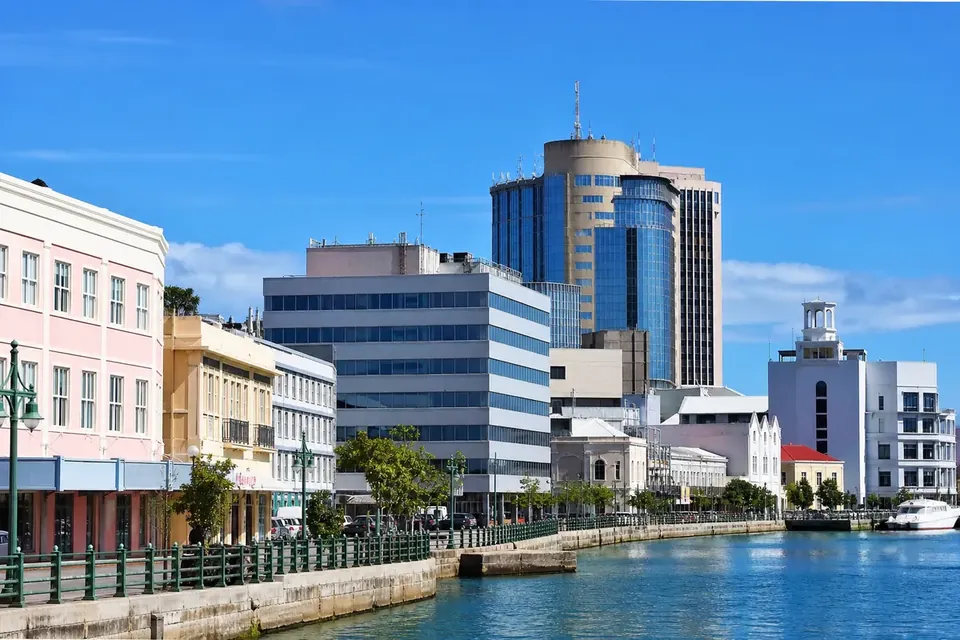
Read Barbados as a services and policy hub first: English-law commercial familiarity, IDB and regional meeting density in Bridgetown, a visible annual fintech conference, and investment-promotion messaging that wants operating companies and skilled jobs — not only brass-plate filings. Domestic payment modernisation (including public discussion of national instant-pay projects in regional coverage) sits adjacent. Treat go-live dates for any national RTP product as dated claims until the central bank or commercial banks confirm production. Climate-finance diplomacy and Bridgetown Initiative branding sit in the same capital — another reason international financial actors already keep Barbados on the calendar — but they are adjacent soft power, not a substitute for FSC rulebooks.
Cayman: funds gravity, then CEC as the tech SEZ
Cayman’s starting point is not a startup weekend. Hope Research Group’s 2025 Cayman fintech/SEZ guide, citing the Cayman Islands Monetary Authority (CIMA) 2024 annual report, places the jurisdiction among the world’s largest financial centres by assets under management, with more than US$7.5 trillion in registered fund assets. The same guide pegs technology’s GDP contribution near 4.2 percent, up from under 1 percent in 2015, following the Virtual Asset (Service Providers) Act 2020 (hoperesearchgroup.com). Those are secondary aggregations of official and industry data; for licensing status, CIMA remains the primary regulator.
Cayman Enterprise City operates the territory’s special economic zones under the Special Economic Zones Act framework administered with the Special Economic Zone Authority. CEC’s own site describes tax exemptions guaranteed through 2061 — no corporate, income, sales, or capital gains tax inside the SEZ package as marketed — plus streamlined setup, immigration pathways, and park verticals (caymanenterprisecity.com):
- Cayman Internet Park — software, fintech, AI, data
- Cayman Media Park — digital media, marketing, creative
- Cayman Science & Technology Park — life sciences, biotech, R&D
- Cayman Commodities & Derivatives Park — commodities, derivatives, virtual asset trading
CEC’s fintech/blockchain pages pitch 4–6 week setup pathways, five-year renewable visas language, 100 percent foreign ownership, import-duty exemptions for zone use, and a physical-presence requirement inside the zone. Conventus Law’s 2025 Cayman fintech overview stresses the dual track: SEZ speed for eligible innovative businesses, while any regulated activity still needs the relevant CIMA licence or registration before commencement, with AML/CTF/CPF obligations applying to regulated entities (conventuslaw.com). That dual track is the ops story. Zone membership is not a substitute for a funds, VASP, or other licence when the activity is regulated.

Two hubs, two buyer personas
If the buyer is a CARICOM operator building payments, insurance tech, or regional SaaS for residents, Barbados’s conference network, FSC perimeter, and Invest Barbados pathway may matter more than Cayman’s funds depth. Proximity to Eastern Caribbean markets, frequent Bridgetown institutional traffic, and a diversification narrative aimed at real employment are the pitch. A founder who needs to hire locally, bank with regional institutions, and sit inside CARICOM policy conversations will weigh Bridgetown differently from a prop desk that only needs a regulated mailbox and a trading stack.
If the buyer is a global funds, trading, or Web3 firm that already understands offshore service-provider ecosystems, Cayman’s CIMA-supervised funds base plus CEC’s SEZ on-ramp is the denser stack. VASP legislation since 2020, English common-law courts familiar to international counsel, and US-time-zone access are the pitch. Hope’s comparative table versus Barbados, Jamaica SEZ, and Puerto Rico Act 60 is useful orientation — and should be re-checked against live statutes before any incorporation decision. CEC’s Media Park and Internet Park also court creative and AI operating companies that want substance without inventing a new funds product — a quieter services story than crypto headlines.
Neither hub is Trinidad’s domestic EMI/checkout story, nor Guyana’s Fast Pay rail. Cross-island, the region still runs multiple licensing islands. A Bridgetown conference badge does not clear a Port of Spain merchant account. A CEC office does not replace a local acquiring licence where one is required. Remittance corridors and local checkout rails — covered in our diaspora remittances brief — still decide whether Caribbean households and SMEs feel any of this hub competition in daily spend.
Soft landings and adjacent programme rails
Regional programmes sometimes name Cayman Enterprise City as an incubator or soft-landing pathway for winning teams. That adjacency appears in Future Caribbean partner coverage on this desk (partners stack) — useful as evidence that CEC markets company-formation pathways into builder networks, not as a claim that Barbados/Cayman hub strategy is that programme. Keep the frames separate: hubs are jurisdiction products; buildathons are talent and attention products.
Powertranz and other Caribbean gateways show up in prize and partner lists for the same reason CEC does: shipping software without a payment or formation path leaves demos stranded. For this post, the citable fact is institutional role, not prize packaging.
What Trinidad and the wider field should notice
Trinidad and Tobago’s payments and industrial stories — Wam’s regulated checkout surface, energy and power for continuous ops — solve different jobs than Barbados conference density or Cayman funds AUM. Operators shopping jurisdictions should separate:
- Where users live (domestic EMI, RTP, consumer protection).
- Where the company is formed (SEZ, IBCs, substance rules).
- Where the assets are administered (funds domicile, VASP registration).
- Where the GPUs and cables are (compute and latency — see our subsea cables brief).
Barbados is loudest on (1) and diversification politics. Cayman is deepest on (2) and (3) for non-resident capital, with CEC trying to thicken (2) for tech operating companies. Confusing those layers produces bad “Caribbean fintech” copy.
What to watch
Watch Barbados FSC virtual-asset rulemaking for whether registration, capital, and travel-rule detail converge on a Cayman-comparable clarity — or stay lighter and slower. Watch FiX attendance and exhibitor mix for whether Caribbean operating fintechs or global crypto vendors dominate the floor. Watch CEC occupancy and park-level disclosures for whether Internet Park and Commodities Park growth is substance or letterhead. Watch CIMA enforcement and VASP registration statistics as the real temperature of Cayman fintech, not SEZ marketing alone. Watch substance and global minimum-tax pressure on all Caribbean service centres — the binding external constraint neither island controls.
For now, the citable core is comparative. Barbados is building a visible fintech event and diversification hub under Invest Barbados messaging and an FSC non-bank perimeter. Cayman already is a funds and VASP jurisdiction at multi-trillion AUM scale, with CEC packaging SEZ parks and a concession horizon to 2061 for eligible tech and trading firms. Both are Caribbean services stories. They are not interchangeable.
Snapshot dated August 15, 2026. Re-read CIMA, FSC, CEC, and Invest Barbados primaries before treating any incentive number as current.