 Yatishara Blog
Caribbean healthtech and telemedicine: sparse specialists, WhatsApp clinics
How island health systems stretch specialist scarcity with chat, video, and informal digital triage — and what public reporting still cannot measure cleanly.
Caribbean healthcare does not fail first at the hospital door. It fails earlier: the referral that takes months, the specialist who flies in twice a quarter, the pharmacy queue that eats a workday, the lab result that never reaches the patient because the only reliable channel is a personal WhatsApp thread. Telemedicine and healthtech enter that gap as improvised infrastructure more often than as a neat product category. Clinics run appointment reminders in chat. Diaspora relatives forward photos of rashes to cousins who know a doctor. Public systems announce digital transformation while the operating reality remains hybrid: paper files, fragmented EMRs, and phone-based triage that sits outside any formal platform KPI.
This brief treats that hybrid as the story. It is not a vendor roundup, not a procurement pitch, and not medical advice. Where regional data is thin, it says so.
Reporting frameOn small islands, the scarce resource is not always a bed. It is a named specialist who can see you before the next flight out.
Specialist scarcity is structural, not temporary
Caribbean demography and training pipelines produce a familiar pattern: general practice and primary care absorb most encounters; cardiology, oncology, nephrology, psychiatry, and paediatric subspecialties concentrate in a handful of urban hospitals or in visiting arrangements. Nurses and midwives carry more of the continuous care load than organigrams admit. Medical tourism marketing can make the region look over-supplied with elective capacity while domestic wait lists for chronic disease management remain long.
The result is rationing by geography and by social network. A patient in Tobago, rural Jamaica, or an OECS island may already know the treatment path before they know how to get an appointment. That knowledge travels through family, church, workplace WhatsApp groups, and diaspora relatives who have seen the same specialist abroad. Digital tools do not invent that network. They compress it.
When Future Caribbean listed Healthcare Systems and Delivery among its 2026 buildathon tracks, the framing was coordination cost across fragmented institutions, not chatbot novelty (Future Caribbean buildathon brief). Health fits that diagnosis tightly. Referral letters, imaging CDs, insurance pre-authorisations, and pharmacy stockouts are coordination failures that punish patients who cannot afford private queues.
WhatsApp clinics are already the front door
Ask clinic administrators what system closes the loop after a Meta ad or a walk-in flyer and the answer is often the same: a phone number that opens a chat. Appointment booking, prescription photo follow-ups, “is the doctor in today,” and payment confirmation all live in threads that staff treat as production systems even when IT policy calls them informal.
That is the same commerce pattern this newsroom tracks in advertising and payments. Hope Research Group’s 2026 Caribbean media work puts regional ad spend near US$1.2 billion with digital already about 38 percent of budgets (Caribbean ad spend 2026). Health brands buy awareness the same way tourism and retail do. Conversion still dies when the owned surface is a thin landing page and the real CRM is unpaid chat labour.
WhatsApp clinics create three operational facts:
- Continuity without an EMR. A nurse can scroll a patient’s photo history faster than many local systems retrieve a chart.
- Privacy risk without a DPA. Personal phones hold clinical images; staff turnover walks data out the door.
- No audit trail for regulators. When something goes wrong, the thread is evidence and liability at once.
Formal telemedicine platforms — scheduled video, e-prescription workflows, payer integration — compete with a free chat app that patients already trust. Products that ignore that gravity redesign the wrong layer. Products that only wrap WhatsApp without consent, retention, and identity controls inherit the liability without reducing the chaos.
Telemedicine that fits island logistics
Useful telemedicine in the Caribbean is less “replace the hospital” and more “reduce pointless travel.” A follow-up that only needs blood-pressure review and medication adjustment should not require a ferry and a day off work. A dermatology consult that can start with high-quality stills should not default to an international flight. A mental-health check-in that patients will actually attend is often asynchronous voice note plus scheduled video, not a 9 a.m. in-person slot they will miss.
The hard constraints are boring and decisive:
- Connectivity. Video consults fail in pockets where 4G drops and home Wi-Fi is shared among many devices. Audio-first and store-and-forward (photo, form, later review) remain more reliable than HD telepresence fantasies.
- Licensure and liability. Cross-island practice rules, malpractice coverage, and prescribing authority do not dissolve because a Zoom room exists. CARICOM mobility talk and national medical councils move on different clocks.
- Diagnostics. Chat cannot replace labs, imaging, or physical exam. Triage that over-promises becomes delayed care with a digital alibi.
- Payment. Many encounters still settle by bank transfer, cash at the desk, or wallet links. Checkout reliability sits under clinical UX the same way it sits under creative spend (Wam Pay Caribbean gateway).
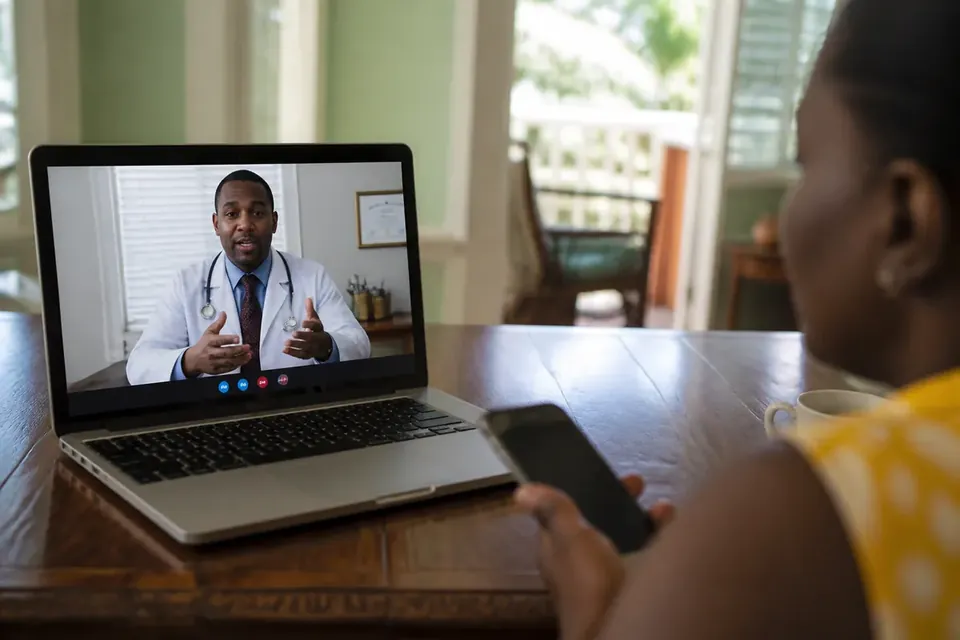
Diaspora telemedicine adds another corridor. Relatives abroad pay for private consults at home, request second opinions, and ship devices. That capital helps households and can distort local pricing if clinics optimise for remittance-funded patients over public-panel load. Reporting should separate “access expanded” from “queue reordered by who can pay in USD.”
Public systems, private apps, and the missing middle
Ministries and regional bodies periodically announce digital health strategies: EMR rollouts, national ID hooks, appointment portals, disease-surveillance dashboards. Parallel to that, private labs, imaging centres, and boutique clinics ship patient apps and WhatsApp business accounts. The missing middle is interoperability. Results stay trapped in one vendor’s portal. Referral packets remain PDFs in email. Vaccination and chronic-disease registries do not talk to the chat thread where the patient actually lives.
Port and trade digitalisation in the same region shows what institutional pressure can force: Maritime Single Windows and Port Community Systems moved because facilitation standards and IMO timelines made manual clearance expensive (Caribbean industries desk, August 2026). Health lacks an equivalent external hard deadline that forces record exchange across islands. Until payers and regulators demand machine-readable handoffs, clinics will keep solving with screenshots.
Cybersecurity follows the same gap. Clinical WhatsApp on personal devices is a data-exfiltration story waiting for an incident write-up. Wallet growth and instant rails raise adjacent fraud surfaces for any clinic that takes deposits online; that payments security beat is covered separately in our Caribbean payment fraud and cybersecurity brief.
Pharmacy, labs, and the last mile of advice
Telemedicine that ends in “buy this medication” without stock visibility is incomplete care. Island pharmacies face importer lead times, forex for branded drugs, and cold-chain limits that no video consult can wish away. Patients often ping three pharmacy WhatsApp numbers after a private consult, shopping price and availability the same way they shop auto parts. Lab work follows a similar path: the order is digital or photographed; the sample is physical; the result returns as a PDF or image in chat; the clinician interprets asynchronously.
That last mile is where healthtech either becomes infrastructure or stays theatre. Inventory signals for essential meds, clearer lab result delivery with patient identity checks, and payer rules that recognise remote follow-ups would move outcomes more than another glossy booking widget. Chronic disease programmes — hypertension, diabetes, dialysis logistics — are the volume use case. Elective second opinions for diaspora-funded patients are the visible marketing use case. Conflating them produces bad product and bad policy.
Disaster seasons sharpen the same distinction. After storms and floods, connectivity and roads fail together. Store-and-forward triage, radio-adjacent coordination, and pre-positioned medication lists matter more than HD telepresence. Future Caribbean’s climate and healthcare tracks sit next to each other for a reason: coordination under stress is the product, not the demo reel (Future Caribbean buildathon).
What operators and reporters should measure
If the region wants healthtech coverage that is not brochure copy, the useful metrics are operational:
- Time from first contact to first specialist opinion, by parish or island.
- Share of follow-ups completed without physical travel.
- Share of clinical communication occurring on unmanaged personal devices.
- No-show rates for video versus in-person slots.
- Prescription fulfilment latency after e-advice.
- Complaint and adverse-event pathways when care happened partly in chat.
Those numbers are mostly unpublished. Until they are, journalists should distrust both extremes: the claim that telemedicine has “transformed Caribbean healthcare,” and the claim that nothing digital matters because hospitals still use paper.
What to watch
Watch whether any CARICOM-wide or OECS licensing path makes cross-island video practice routine rather than exceptional. Watch whether public EMR programmes publish interchange standards that private labs actually implement. Watch whether clinics migrate from personal WhatsApp to managed business tooling with retention controls — or keep the informal stack because patients refuse to download another app. Watch how remittance-funded private telemedicine changes urban waiting lists. Watch fraud and privacy incidents as more clinics take deposits through wallet links and hosted checkout.
For now, the accurate map is hybrid. Caribbean healthtech is real where it shortens travel and speeds triage. Telemedicine is useful where connectivity, licensure, and diagnostics are honest about limits. WhatsApp clinics are already the front door for a large share of private and semi-private care coordination. Formal platforms that pretend otherwise are writing for a different region. Formal systems that never measure the chat layer will keep missing where care actually happens.