 Yatishara Blog
Caribbean tourism product rebuild 2026: GDP targets, yachts, hotels, and ministry maths
Ministries are rewriting tourism as measurable product, not arrival vanity. T&T’s 6%→12% GDP target, SailClear, SKN and SVG yachting pushes, and BVI’s 2026–2036 plan — thin spots marked.
Caribbean tourism strategy in 2026 sounds less like “more arrivals” and more like “which product, at what spend, counted how.” Ministries are publishing GDP contribution targets, yacht-call ambitions, hotel pipeline numbers, and clearance-time reforms. The rebuild is not only marketing. It is an attempt to make tourism readable as an export sector with segments, unit economics, and institutional owners.
This brief stays with ministry releases, national plans, and named press of record. Tourism Satellite Account coverage remains uneven across islands; where measurement is aspirational, the copy says so. No destination campaign, no package upsell.
Reporting frameArrival counts flatter. Product and retained spend decide whether tourism rebuilds the accounts.
Trinidad and Tobago: Tourism Re Think as a GDP brief
Trinidad and Tobago’s Ministry of Trade, Investment and Tourism (MTTI) framed a “Diversification in Action” year-one report that treats tourism as a clean-sheet product exercise rather than a residual of energy. In that public presentation, tourism’s contribution is cited at about 6 percent of GDP in 2025, with a national target to double to 12 percent by 2030 — language that also carries an estimated US$1.7 billion economic-value framing attached to the doubled share (tradeind.gov.tt).
Six priority segments are named in the ministry materials:
- Yachting
- Sport tourism
- Carnival and cultural product (as prioritised in the rethink framing)
- Leisure / destination product lines in the ministry’s categorisation
- Business tourism
- Tertiary health and education tourism
Exact segment labels can shift slightly across slide vs. web narrative; the durable point is segment priority, not a single beach brand.
Hotel and accommodation investment is reported as a measurable pipeline: 9 committed tourism accommodation projects, 577 new rooms, 741 permanent jobs, with completion expected into 2027/2028 in the ministry’s year-one account. Those figures are government claims from the diversification report, not a private census of every bed.

Yachting as the measurable turnaround story
Yachting is where T&T’s rebuild narrative is most quantitative — and most honest about decline. MTTI reports yacht arrivals falling from roughly 2,600 vessels around 2000 to under 800 in 2025, blaming inefficiencies and outdated processes among other factors (tradeind.gov.tt). The turnaround package in the same materials includes:
- SailClear digital clearance, cutting processing from about four hours to 15 minutes, with launch scheduled for June 2026 in the ministry’s account.
- A new Port Health clearance path described as reducing time from two days to under two minutes.
- Ambition to double yacht arrivals within two years and reach 3,000 vessel arrivals by 2030, with foreign-exchange potential framed near US$200 million in the ministry narrative.
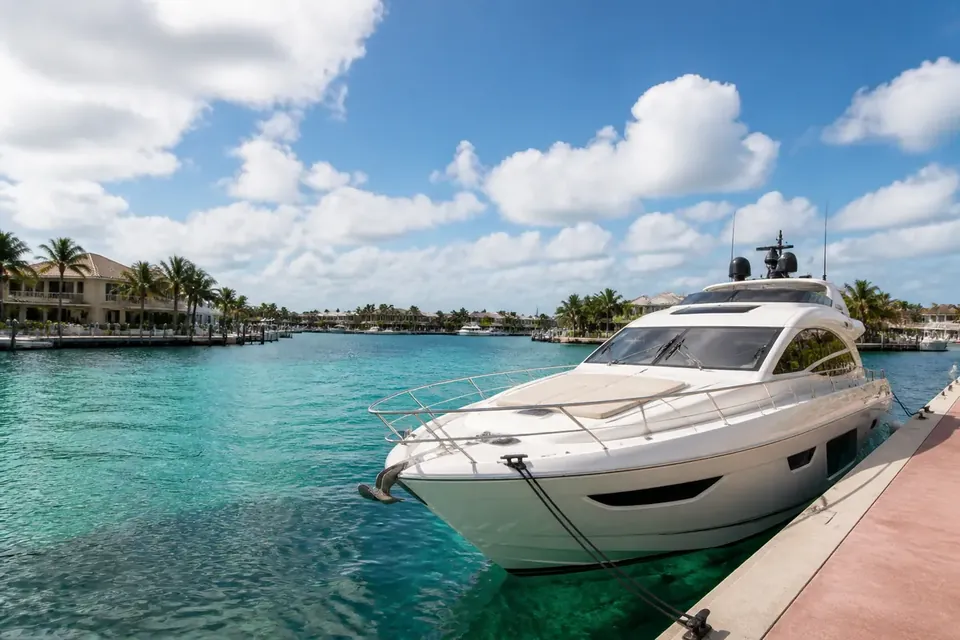
Those clearance claims are ministry-reported operational targets and early reform results — verify against live SailClear and Port Health notices as the June 2026 window ages. The strategic logic is clearer than any single stopwatch number: high-value marine visitors spend on haul-out, provisioning, crew services, and repairs; slow clearance destroys that spend even when the anchorage is attractive.
Eastern Caribbean neighbours are running parallel yachting arguments with different stats. In January 2026, St. Kitts and Nevis Prime Minister Dr. Terrance Drew publicly framed yachting as diversification with skills training attached, citing well over 125 yachts in a short period and more than 500 additional expressions of interest, and arguing the sector could outgrow cruise in local value if services and college training catch up (sknis.gov.kn). In April 2026 coverage, St. Vincent and the Grenadines Tourism Minister Dr. Kishore Shallow argued SVG sees a large share of Eastern Caribbean yacht traffic — an estimated 36 percent passing through — without capturing enough local servicing revenue (searchlight.vc). Different islands, same product diagnosis: transit without service capture is a leak.
Hotels, rooms, and what “product” means beyond beds
Room pipelines are the classic tourism KPI because they are countable. They are also incomplete. A 577-room T&T pipeline matters if occupancy, length of stay, and local procurement rise with it. Business tourism and health/education tourism — explicit in MTTI’s six segments — depend on airlift reliability, conference infrastructure, and clinical or campus partnerships that do not show up in a rooms spreadsheet.
Carnival and cultural product — however labelled in a given ministry slide — is Trinidad’s distinctive export-facing tourism asset and also a measurement headache. Visitor spend during festival peaks mixes hotel nights, costumes, food, transport, and informal services that national accounts capture unevenly. A product rebuild that names culture as a priority segment therefore implies investment in crowd management, safety, and vendor formalisation, not only a bigger fireworks budget. Neighbouring islands face the same issue with regattas and music festivals: the “product” is an event system with supply chains, not a single attraction page.
Cruise remains politically visible across the region but is increasingly contrasted with yachting and stayover products on spend-per-visitor grounds in ministerial rhetoric (SKN’s comparison is the blunt version). Independent, comparable per-visitor spend series across CARICOM remain thinner than speechwriting needs; mark that as a regional statistics gap. Ports digitalisation — MSW and PCS maturity covered in our ports digitalisation brief — sits under cruise and yacht product alike: slow clearance is a product defect regardless of which brochure sold the call.
Sport tourism and tertiary health/education tourism need different infrastructure clocks. Stadia, training camps, and medical travel corridors require multi-year capital and regulatory alignment (visa facilitation, malpractice frameworks, clinic accreditation). Ministry lists that place them beside yachting are making a diversification claim: do not bet the entire rebuild on one marine segment. The public record is thinner on dated capital programmes for those segments than on yacht clearance reforms — another thin spot worth naming rather than papering over.
British Virgin Islands planning documents for 2026–2036 put institutional reform and measurement deficits on the page: Ministry ownership of product development and standards, Tourist Board focus on marketing, festival professionalisation, and a film commission path — alongside explicit admission of missing visitor-spend tools and weak data-sharing protocols in the public/private tourism system (gov.vg VINTP PDF). That candour is useful regional context: product rebuild requires statistical rebuild. Without a Tourism Satellite Account or equivalent, “double tourism’s GDP share” remains a political sentence searching for a denominator.
Hotel star ratings and villa inventories also fail as sole product proxies. A “five-star” label does not measure local food procurement, guide quality, or marine-service depth. Yachting product rebuilds that ignore haul-out capacity, chandlery, and trained technicians will print clearance-time wins and still lose the spend to the next island with a working yard. That is why SKN’s skills-college framing and SVG’s marina-infrastructure priority are economically of a piece with T&T’s SailClear stopwatch claims: each is trying to convert a passing hull into retained domestic value.
How this sits beside ads, payments, and culture tech
Destination marketing budgets still buy Meta and YouTube inventory — Hope’s regional ad map puts digital near 38 percent of Caribbean ad spend overall (ad spend 2026). The product-rebuild thesis implies those clicks should land on bookable product with clear packages, not brochure PDFs. Chat-first booking behaviour, covered in our WhatsApp commerce frame, is already how many villa and tour operators close — payments and confirmation remain the fragile step (Wam gateway; Fast Pay context in Guyana for adjacent digital rails: guyana-fast-pay-upi).
Cultural and language models are entering the destination stack from another angle. Jamaica’s Amber cultural LLM story is not a hotel KPI, but it signals how heritage product may be mediated digitally for diaspora and visitor discovery (Amber Jamaica cultural LLM). Film and creative export offices, for their part, sit next to tourism as screen-tourism and services export — see the companion creative-export brief when reading ministry diversification lists that name film beside yachting.
Energy and industrial diversification desks also collide with tourism for airlift, hotel demand from project crews, and waterfront land use. Trinidad’s dual identity as energy hub and tourism rethink case is the sharpest example (energy hub; industries desk).
Field note: product briefs beat arrival slogans
Thin spots
- Harmonised Caribbean yacht-call and spend statistics with shared definitions.
- Post-go-live audited SailClear time savings after June 2026.
- TSA-grade proof behind every GDP percentage used in speeches.
- Comparable hotel pipeline tracking outside government investment lists.
What to watch
Watch whether T&T’s 2030 GDP-share target appears in Budget and Central Statistical Office publications with methodology, not only ministry decks. Watch SailClear adoption numbers and yacht-call recovery versus the sub-800 baseline. Watch SKN training cohorts and SVG marina infrastructure moves for whether “service capture” becomes measurable local GVA. Watch BVI’s Tourism Development Act path and film-commission standing as a governance test for product vs. marketing split. Watch whether digital ad spend in Hope’s next wave attaches to bookable inventory or continues to fund brochureware.
For now, the citable core is this: Caribbean tourism policy in 2026 is openly rebuilding around products and retained value — yachts, rooms, sport, culture, business, health — with Trinidad’s MTTI materials the clearest GDP-math example in the public English-language set (tradeind.gov.tt). Clearance digitalisation and marina services are treated as product features, not back-office chores. Measurement still lags ambition in several islands. That gap is part of the story, not a footnote, in August 2026.